Biopics carry a responsibility: to illuminate truth through story. The Michael Jackson movie doesn’t just fall short—it stumbles at the first step. Instead of offering insight, context, or emotional honesty, it delivers a sanitized, surface-level pageant that avoids the very complexities that defined Jackson’s life. A biopic’s basic duty is to explore who a person was, not just what they did. This film fails that duty completely.
The Illusion of Depth Without Substance
From the opening frames, the Michael Jackson movie pretends to be probing. Archival footage, dramatic close-ups, and sweeping orchestration suggest depth. But behind the spectacle lies a hollow narrative. The film traces milestones—Motown success, Thriller’s dominance, the Neverland years—but never interrogates the forces behind them.
Consider the treatment of Jackson’s changing appearance. The movie glances at his skin condition and plastic surgery, but offers no psychological or cultural context. It skips over the documented pain, the racial identity struggles, the public scrutiny. Real biopics wrestle with contradiction. This one smooths it all over like airbrushed album art.
Compare this to Walk the Line, which didn’t just show Johnny Cash’s rise and fall—it explored his addiction, his relationship with June Carter, and the tension between fame and morality. The Michael Jackson movie avoids such tensions. It’s not cautious. It’s cowardly.
Avoiding Controversy Is Not Neutrality—It’s Narrative Sabotage
A biopic about Michael Jackson cannot ethically sidestep the allegations of child abuse. Pretending they don’t exist isn’t neutrality. It’s complicity. The film dances around the 1993 investigation and the 2005 trial, reducing them to vague shadows in the background. It’s as if the filmmakers hope viewers won’t notice the elephant in the room—except the elephant is stomping through every frame.
This isn’t just a failure of courage. It’s a failure of storytelling. Conflict is the engine of drama. By removing the most intense conflicts in Jackson’s life, the film drains all stakes. There’s no tension, no evolution, no redemption arc—because there’s no real obstacle.
Imagine a Lennon biopic that ignores Yoko Ono, or an Elvis film that omits his pill dependency. These aren’t side notes—they’re central to understanding the artist. The same applies to Jackson. The allegations, the trials, the media frenzy, the isolation—these aren’t distractions from his story. They are the story.
And yet, the movie treats them like a PR problem to be minimized. The result? A portrait so sterile it feels less like a human being and more like a hologram programmed to moonwalk.
The Music Is Revered, But the Man Is Ignored
The film doesn’t skimp on the hits. Billie Jean. Beat It. Black or White. The audio mix is pristine, the choreography replicated with eerie precision. On a technical level, the musical sequences work. But technical skill doesn’t substitute for emotional truth.

Jackson’s music was never just entertainment. It was coded autobiography. Leave Me Alone was a cry against intrusion. Stranger in Moscow reflected isolation. Earth Song revealed spiritual anguish. A great biopic would connect these songs to the moments that inspired them.
Instead, the film uses the music as wallpaper. Songs play over montages of tabloid headlines or rehearsal clips, but no attempt is made to link art to experience. The lyrics float by, untethered. The emotional weight is lost.
This is like showing Van Gogh painting Starry Night without mentioning his mental state, or depicting Dylan writing Like a Rolling Stone without referencing his alienation. The art becomes decoration, not revelation.
Casting the Myth, Not the Man
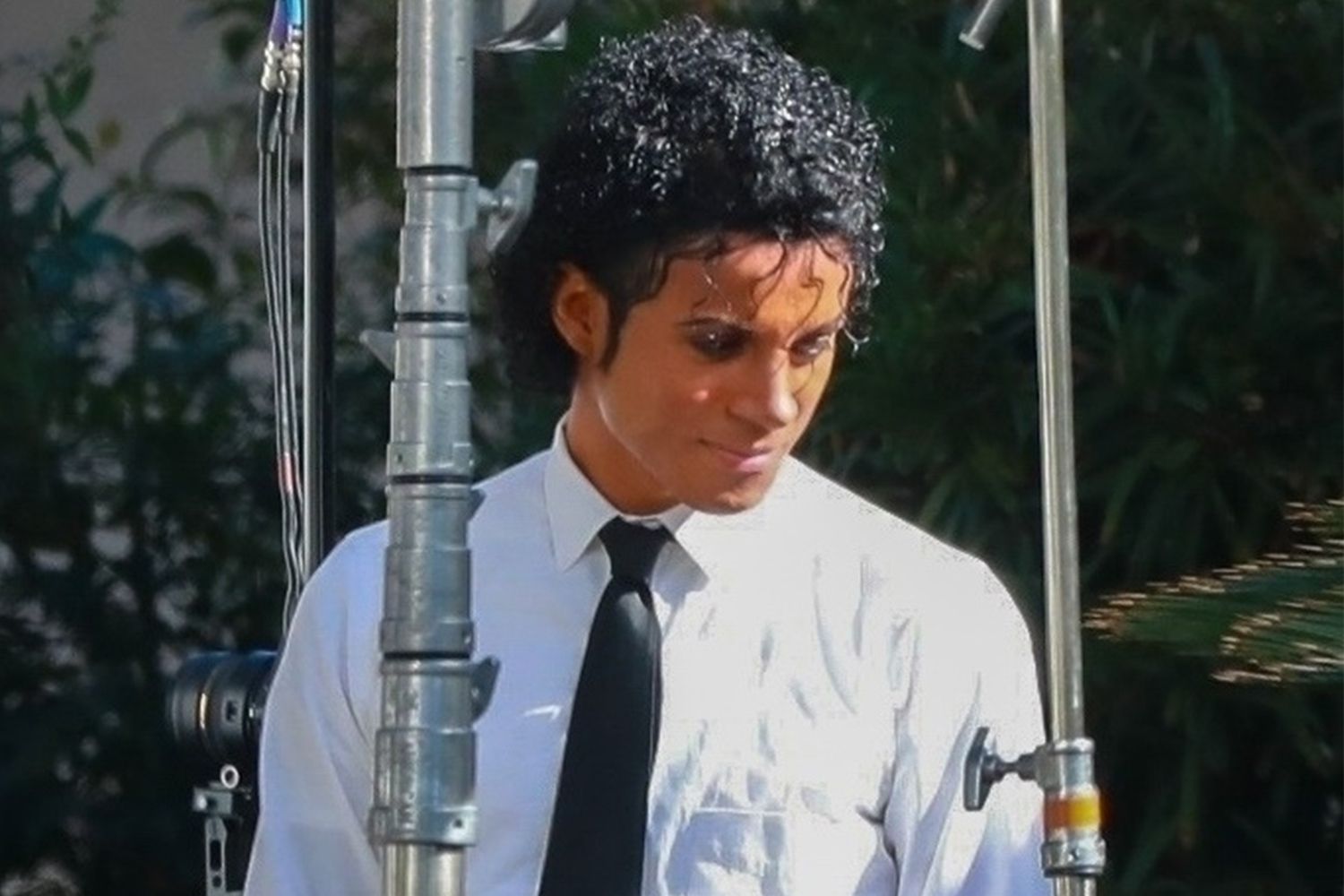
The lead actor is technically proficient—nimble footwork, high-pitched vocal inflections, the glove, the hat. But mimicry isn’t performance. There’s no interiority. We never see doubt, insecurity, longing, or rage. Jackson was famously complex—childlike yet calculating, generous yet controlling, vulnerable yet defiant. The portrayal flattens all of that into a series of tics.
Good biopics don’t rely on resemblance. They rely on empathy. Joaquin Phoenix in I’m Still Here didn’t just look like a damaged artist—he felt like one. Rami Malek in Bohemian Rhapsody was criticized for many things, but even his performance had moments of raw exposure.
Here, we get a flawless impersonation with no soul. The performance reinforces the myth, not the man. And in doing so, it does exactly what Jackson spent decades fighting: reducing him to an image, not a person.
The Estate’s Influence: When Control Undermines Truth
It’s no secret that the Jackson estate holds tight control over the artist’s image. And that control shows. The film feels less like a cinematic inquiry and more like a brand management exercise. Controversial figures—like certain advisors or family members—are absent. Painful moments are glossed over. The narrative bends toward legacy preservation, not truth-seeking.
Biopics produced with estate approval often face this tension. Elvis (2022), while stylized, still allowed room for critique—Tom Hanks’ Colonel Parker was portrayed as manipulative, even predatory. The Michael Jackson movie refuses such nuance. Anyone close to Jackson is shown as loyal. Every decision is framed as noble.
But real legacy isn’t built on silence. It’s built on reckoning. The Beatles’ story is powerful not because it’s clean, but because it includes the breakup, the egos, the drugs, the creative clashes. The same should apply to Jackson. By refusing to engage with the darkness, the film makes the light meaningless.
What a Michael Jackson Biopic Should Have Been
A successful biopic doesn’t need to condemn or canonize. It needs to understand. A better film would have explored:
- The Jackson 5 years: The pressure of child stardom, the role of Joe Jackson, the loss of a normal childhood.
- The transition to solo fame: How Jackson navigated racial barriers in pop music and redefined performance.
- His creative process: Studio sessions, perfectionism, collaborations with Quincy Jones.
- His psychological world: The documented insomnia, the painkiller use, the desire to escape reality.
- The Neverland paradox: A sanctuary for children that became a prison of suspicion.
Such a film would have used Jackson’s own words—interviews, letters, home recordings—to ground the narrative. It would have included voices from across his life: dancers, engineers, journalists, even critics. It would have accepted ambiguity.
Instead, we get a highlight reel with gaps where the hard questions should be.
Why This Failure Matters Beyond One Film
The failure of this biopic isn’t just about one movie. It reflects a broader trend in celebrity storytelling: the preference for image over insight. Studios want safe, marketable projects. Estates want control. Streaming platforms want content, not controversy. And audiences—accustomed to soundbite biographies on social media—may not demand more.
But that’s precisely why biopics matter. In an age of misinformation and myth-making, they can serve as cultural reckonings. They can humanize icons. They can turn legends back into people.
When a biopic fails—especially one about a figure as significant as Michael Jackson—it doesn’t just disappoint. It deprives us of a chance to understand.
A Biopic’s Duty Is Not to Praise, But to Reveal
The basic duty of a biopic is not to make us love the subject. It’s not to protect their legacy. It’s to show us who they were—flaws, contradictions, triumphs, and all. The Michael Jackson movie doesn’t do that. It shields us from discomfort. It replaces inquiry with spectacle. It mistakes reverence for respect.
In avoiding the hard truths, the film does Jackson a disservice. It turns a man who fought to be seen into a silhouette. And it turns a story that could have been profound into something forgettable.
For fans, for historians, and for future artists, that’s the real failure.
FAQ
Why is the Michael Jackson movie criticized so heavily? Because it avoids the controversial and emotional complexities of Jackson’s life, opting for a sanitized, surface-level portrayal that fails to explore who he really was.
Does the movie address the abuse allegations? Only indirectly and minimally. It acknowledges public scrutiny but sidesteps detailed discussion of the accusations or trials, which is a major narrative omission.
Is the lead actor’s performance accurate? Technically, yes—the mannerisms, voice, and dance moves are well-replicated. But the performance lacks emotional depth and fails to convey Jackson’s inner world.
Was the Jackson estate involved in the film? Yes, and their influence is evident in the film’s protective tone, omission of contentious figures, and overall avoidance of critical perspectives.
How does this biopic compare to other music biopics? It falls short of films like Walk the Line, Ray, or even Bohemian Rhapsody, all of which, despite flaws, attempt to grapple with their subjects’ flaws and struggles.
Could a better Michael Jackson biopic be made? Yes—but it would require creative independence, access to honest testimonies, and a willingness to explore both his genius and his demons without fear.
What should a Michael Jackson biopic focus on? Child stardom, racial barriers in music, artistic innovation, psychological struggles, relationships, and the impact of fame—told with honesty, not hero worship.
FAQ
What should you look for in The Michael Jackson Movie Fails at the Basic Duty of a Biopic? Focus on relevance, practical value, and how well the solution matches real user intent.
Is The Michael Jackson Movie Fails at the Basic Duty of a Biopic suitable for beginners? That depends on the workflow, but a clear step-by-step approach usually makes it easier to start.
How do you compare options around The Michael Jackson Movie Fails at the Basic Duty of a Biopic? Compare features, trust signals, limitations, pricing, and ease of implementation.
What mistakes should you avoid? Avoid generic choices, weak validation, and decisions based only on marketing claims.
What is the next best step? Shortlist the most relevant options, validate them quickly, and refine from real-world results.