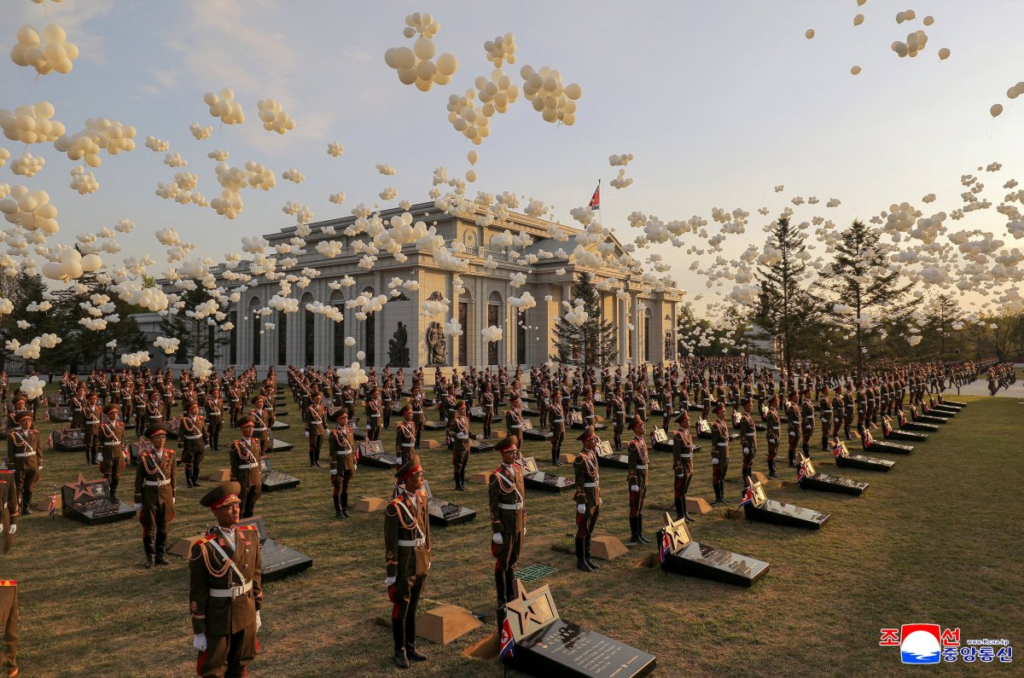
North Korea’s latest move to open a museum commemorating troops killed while fighting for Russia isn’t just a memorial—it’s a calculated act with deep political and strategic implications. While independent verification remains scarce, the regime’s decision to publicly honor these soldiers signals a shift in how Pyongyang positions itself in global military dynamics. Whether or not these troops actually engaged in direct combat, the narrative is being weaponized.
This museum isn’t merely about loss. It’s about legitimacy, control, and messaging—both domestically and internationally. In a country where information is tightly controlled, such a monument serves multiple purposes: justifying foreign entanglements, reinforcing loyalty to the regime, and constructing a legacy of sacrifice in service of a greater cause.
Below, we unpack what this museum reveals about North Korea’s evolving foreign policy, the role of propaganda in militarized states, and what the world should read between the lines.
What the Museum Reveals About DPRK-Russia Military Ties
The opening of a museum dedicated to North Korean soldiers who died fighting for Russia suggests more than symbolic solidarity—it implies operational involvement. While Russia has not confirmed the presence of North Korean troops on its battlefields, and Western intelligence remains cautious, the very act of memorializing implies Pyongyang is treating these deaths as official military losses.
Historically, North Korea has exported labor and weapons, not soldiers. But recent reports from border regions, satellite imagery near Vladivostok, and intercepted communications indicate potential troop transfers. The museum, located in a secure compound outside Pyongyang, reportedly includes personal effects, uniforms, and battlefield artifacts—all curated to suggest frontline combat.
Key implications: - Escalation of military cooperation: This isn’t just arms sales. Human casualties elevate the relationship to a new tier. - Domestic justification: Sacrifices must be framed as noble to maintain public support. - International signaling: A message to both allies and adversaries—North Korea is willing to fight for its partners.
The regime’s narrative is clear: its soldiers didn’t die in vain. They died as heroes in a broader anti-imperialist struggle. That framing matters—especially when directed at a population conditioned to view foreign powers as existential threats.
Propaganda as National Infrastructure
In North Korea, monuments aren’t just cultural artifacts—they are instruments of state control. The museum honoring troops killed in Russia fits a long-standing pattern: turning military loss into ideological reinforcement.
Consider the Victorious Fatherland Liberation War Museum in Pyongyang, which depicts the Korean War as a heroic defense against U.S. aggression. Now, this new installation extends that tradition to a foreign conflict—one most North Koreans know little about. The regime must now construct a backstory: why were our soldiers in Russia? Who were they fighting? Why did they die?
Answers will follow the playbook: - The enemy is Western imperialism - Russia is a socialist brother facing unjust siege - North Korea’s involvement is defensive, not aggressive
This isn’t just about honoring the dead. It’s about recruiting the living. By showcasing battlefield gear, last letters, and “heroic” final acts, the museum becomes a recruitment tool. It normalizes foreign deployment and militarizes national identity further.
The Unverified Nature of the Claims
No independent journalists have accessed the museum or verified the identities of the deceased. The North Korean government has released no official death toll, unit names, or deployment timelines. This lack of transparency raises serious questions.
- Possible scenarios:
- Actual combat deaths: North Korean special forces or artillery units were deployed and suffered casualties.
- Accidental deaths during training: Troops may have died in accidents while handling Russian-supplied weapons or during joint drills.
- Fabricated narrative: The museum could be entirely symbolic—a propaganda stunt with no real battlefield losses.
Each possibility carries weight. If the deaths are real, it confirms a dangerous escalation. If they’re exaggerated or invented, it reveals the regime’s desperation to appear as a global player.
Western analysts point to inconsistencies: no verifiable obituaries, no known repatriation of remains, and no confirmation from Russian military sources. Yet satellite images show increased activity at known DPRK diplomatic and military sites near the Russian border—suggesting some form of coordination.
Geopolitical Fallout and International Response
The museum’s opening has drawn sharp reactions. The U.S. State Department called it “deeply concerning,” warning that direct North Korean military involvement in Ukraine or other Russian conflicts would violate multiple UN Security Council resolutions. South Korea has urged restraint, while China remains characteristically silent—likely aware of its own role in facilitating DPRK-Russia ties.
But beyond diplomacy, this development alters the strategic landscape: - Sanctions enforcement becomes harder: If North Korean soldiers are fighting abroad, tracking arms shipments and personnel movements grows more complex. - Russia gains deniability: Using foreign troops allows Moscow to obscure its own losses. - North Korea gains leverage: As a military supplier and potential manpower source, Pyongyang strengthens its bargaining position.
There’s also a psychological dimension. For Kim Jong Un, aligning with Russia against the West reinforces his image as a defiant leader standing up to American hegemony. The museum becomes a physical manifestation of that stance.
How This Affects North Korean Society
Inside North Korea, few citizens have access to outside information. State media controls the narrative completely. For them, this museum isn’t controversial—it’s tragic and heroic.
School groups will be bused in for mandatory visits. Soldiers will be required to study the “sacrifices” made by their comrades. Families of the deceased will be awarded special status—“Martyr’s Family”—with access to better housing, food rations, and educational opportunities for their children.
But there are risks: - Public skepticism: If families suspect their loved ones died not in noble combat but in avoidable accidents, loyalty could erode. - Fear of conscription: Rumors of foreign deployment may spark quiet resistance. - Economic strain: Sending troops abroad costs money—money North Korea doesn’t have.

The regime will downplay these issues. Instead, it will emphasize glory, sacrifice, and brotherhood with Russia. The museum will be featured in documentaries, textbooks, and party congress speeches.
The Museum’s Design and Symbolism
Though full architectural details remain classified, early defector reports and limited imagery suggest a solemn, militarized design: - A central hall with a large mural depicting soldiers in combat - Glass cases displaying blood-stained uniforms, dog tags, and weapons - An eternal flame and a wall listing the names of the “fallen” - Audio recordings of alleged battlefield radio transmissions
Every element is designed to evoke emotion and obedience. The color palette—dark gray, red, and black—reinforces themes of struggle and resilience. Visitors are likely required to bow, remain silent, and sign loyalty pledges.
Compare this to Russia’s own war memorials, which often emphasize scale and heroism. The North Korean version will be more intimate, more personal—making the loss feel immediate, even if the war is thousands of miles away.
Why This Isn’t Just About Russia
While the museum commemorates deaths tied to Russia, its real audience is domestic. Kim Jong Un isn’t building this for Moscow’s benefit—he’s building it to strengthen his own rule.
This move fits a broader pattern: - 2023: Increased arms shipments to Russia - 2024: Satellite imagery suggests troop movements to Russian Far East - 2025: Public memorial for “fallen soldiers”
Each step escalates North Korea’s role from supplier to participant. And each step requires greater internal justification. The museum is the centerpiece of that justification.
Moreover, it positions North Korea not as a rogue state, but as a key player in a multipolar world. Kim wants his people—and the world—to see the DPRK as an equal partner to nuclear-armed powers, not a pariah.
What the World Should Watch For The museum’s opening is a signal. What follows will determine whether this is the start of deeper military integration or a one-off propaganda effort.
Key indicators: - More memorials or public funerals: A pattern of commemorations would confirm sustained involvement. - Changes in conscription policies: If North Korea begins drafting younger or older age groups, it may be preparing for wider deployment. - Russian acknowledgment: If Moscow officially thanks North Korea for “military support,” the partnership becomes undeniable. - UN investigations: Satellite monitoring and defector testimonies may eventually confirm or debunk the claims.
Until then, the museum stands as both monument and mystery—a symbol of sacrifice, or a carefully staged illusion.
The North Korea-Russia military relationship is no longer just about weapons. It’s about people, loss, and the stories regimes tell to justify both. The museum honoring troops killed fighting for Russia is more than a tribute. It’s a declaration: North Korea is no longer on the sidelines.
For analysts, policymakers, and citizens alike, the question isn’t just whether these soldiers died—but what their deaths are being used to build.
FAQ
What should you look for in North Korea Opens Museum for Troops Killed in Russia? Focus on relevance, practical value, and how well the solution matches real user intent.
Is North Korea Opens Museum for Troops Killed in Russia suitable for beginners? That depends on the workflow, but a clear step-by-step approach usually makes it easier to start.
How do you compare options around North Korea Opens Museum for Troops Killed in Russia? Compare features, trust signals, limitations, pricing, and ease of implementation.
What mistakes should you avoid? Avoid generic choices, weak validation, and decisions based only on marketing claims.
What is the next best step? Shortlist the most relevant options, validate them quickly, and refine from real-world results.